The electrical contracting industry stands at a critical inflection point, with numerous structural tailwinds underpinning the industry that we expect to drive demand for electricians over the medium to long-term. These demand trends coupled with a declining supply of electricians elevates the need for high caliber approaches to HR functions around skilled trade recruiting, development, and retention to maintain and grow market share in this attractive segment. This pressure to attract talent creates a dynamic whereby larger, well capitalized organizations appear to have an advantage over smaller local firms. However, with the right focus and attention on creating clarity and opportunity for skilled tradespeople, local and regional firms can position themselves for significant growth.
Macro Environment
Labor Imbalance
There are ~820k electricians in the U.S. today, with demand forecasted to increase 9% to 896k electricians by 2034. This is well above both total forecasted job growth (3%) and forecasted growth for broader construction trade workers (6%) over the same period. This rising demand is coupled with a declining labor supply, due to an aging workforce (~30% of union electricians are nearing retirement age) and a shortage of new labor entering the workforce. The National Electrical Contractors Association (“NECA”) estimates that every year 7k new electricians enter the industry while 10k retire. By 2034, this implies a ~110k electrician labor shortage. This shortage is already reflected in the current market through higher electrician wages (increasing at ~3–4% annually) which are likely to persist given the supply / demand imbalance.
Demand Drivers
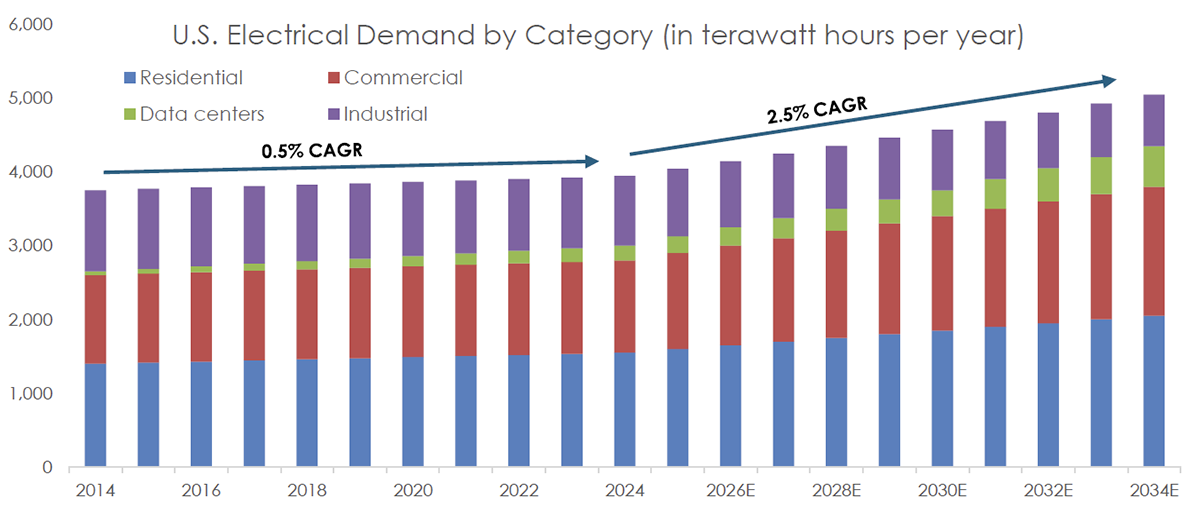
The U.S. electrical load is forecasted to grow 2.5% per year over the next 10 years, a significant step up from the 0.5% annual growth achieved over the prior 10 years (as outlined below and on the following page). Incremental growth above the 0.5% per year baseline is expected to be driven by (i) building electrification (1.0% per annum), (ii) data centers (0.5%), (iii) industrial growth (0.3%), and (iv) EV adoption (0.2%).
I. Building Electrification: Energy demand is shifting from on-site fossil fuels (e.g., gas-fired heating, water heaters, etc.) to electric alternatives (e.g., electric heating, heat pumps). This has been an ongoing trend (e.g., in 2010 35% of U.S. households’ main source of heating was electricity, up to 42% in 2024) and is expected to accelerate, with certain cities across CA, CO, and MA already banning the use of fossil fuels for newly constructed buildings.
II. Data Centers: These facilities are significant users of electricity, and material investments are being made in data center electrical infrastructure to supply the compute power required from AI adoption. While the data center buildout will have an impact on electrical demand, as a percentage of the market it is relatively nascent today. Headlines overstate data centers’ impact on demand, and strong tailwinds exist outside of this category – making the market less susceptible to a bubble popping.
III. Industrial Growth: Aided by reshoring and federal policy support, new U.S.-based industrial plants are being constructed, leading to boosted demand for electrical power as these plants are connected to the grid. Additionally, further demand is driven by facilities that are out of date that require retrofitting / reconstruction.
IV. EV Adoption: Significant grid investment will be needed to support the anticipated demand for EVs and the inherent need for additional charging stations to keep them powered. As the number of EVs on the road continues to increase, there will be further pressure to expand current charging infrastructure both in the form of at-home charging ports and public charging centers.
For informational purposes only. Intended for General Partners or Management teams considering partnering with The Riverside Company. Not to be considered an offer or solicitation of securities or investment services.